Wood Vinegar Shows Promise for Reducing Odour in Dairy Manure Composting

Wood Vinegar Shows Promise for Reducing Odour in Dairy Manure Composting

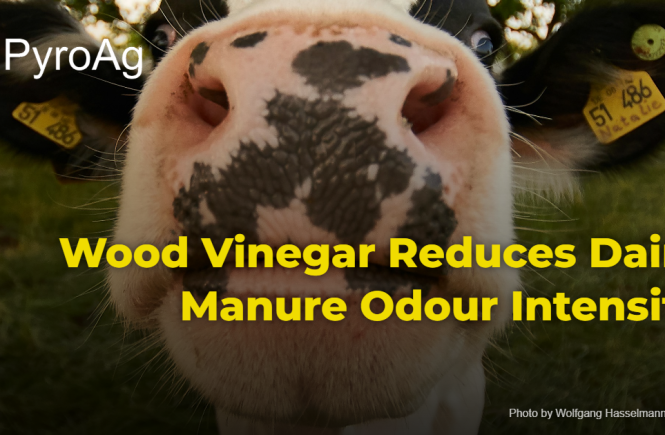
New research has found that wood vinegar can significantly reduce odour intensity during dairy cattle manure composting while improving compost quality. The study, published in the Malaysian Journal of Soil Science, tested wood vinegar both alone and in combination with rice husk biochar and beneficial bacteria, with results that could interest Australian dairy producers managing manure composting operations.

Researchers evaluated three amendments added to dairy cattle manure: wood vinegar (pyroligneous acid) at 5% concentration, rice husk biochar at 10%, and a microbial inoculant containing Bacillus licheniformis, Bacillus megaterium, and Lactobacillus acidophilus. They tested these materials individually and in various combinations over a composting period, measuring odour intensity, temperature, pH, moisture content, and nutrient levels.

The most effective treatment for odour reduction was the combination of all three amendments — wood vinegar, biochar, and the bacterial inoculant. This combination achieved the lowest odour intensity scores throughout the composting process. Wood vinegar played a key role in this odour control, with treatments containing wood vinegar consistently performing better than those without it.

Beyond odour control, the amendments improved compost quality. Treatments with wood vinegar and biochar accelerated the composting process, reaching higher temperatures during the thermophilic phase — the hot stage of composting where beneficial microbes break down organic matter rapidly. Final compost products showed improved nutrient content and better physical properties compared to untreated controls.

The study measured specific parameters including total nitrogen, available phosphorus, exchangeable potassium, and organic carbon content. Treatments combining wood vinegar with biochar and beneficial bacteria produced compost with higher nutrient availability, suggesting potential value for soil fertility when the finished compost is applied to fields.

This research adds to the growing body of evidence examining wood vinegar’s role in agricultural waste management. While most wood vinegar research has focused on direct soil or plant applications, this study demonstrates potential benefits in the composting process itself — particularly for operations where odour management is a concern. For dairy producers near residential areas or managing large-scale composting operations, odour reduction can be as important as compost quality.

The researchers noted that wood vinegar’s acidic properties and antimicrobial compounds likely contributed to odour suppression while still supporting beneficial composting microorganisms. The synergistic effect of combining wood vinegar with biochar and selected bacteria suggests that integrated approaches may deliver better results than single amendments alone.

Source: Effects of Rice Husk Biochar, Wood Vinegar, and a Bacillus-Lactobacillus Inoculant on Odour Intensity and Quality of Dairy Cattle Manure Compost in Cu Chi — Malaysian Journal of Soil Science, 2026

Interested in learning more about wood vinegar? Order PyroAg now or call 1800 PYROAG (1800 796 224).

Wood Vinegar Boosts Chlorophyll Levels in Greenhouse Cucumbers

Wood Vinegar Boosts Chlorophyll Levels in Greenhouse Cucumbers

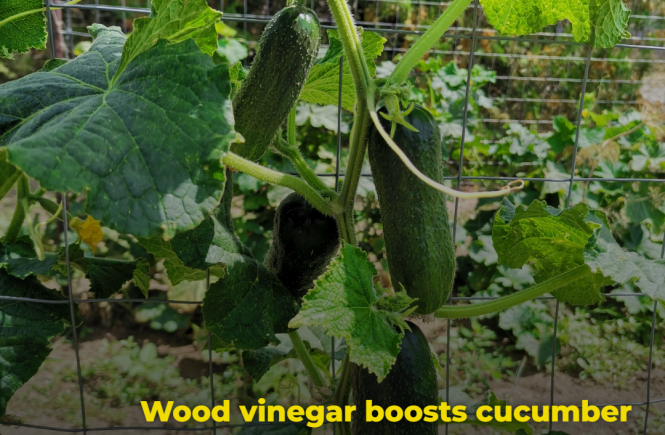
New research on greenhouse cucumbers has found that wood vinegar applications significantly increased chlorophyll a levels, with the highest results occurring at a 2 mg/L application rate. The study, published in the Journal of Plant Process and Function, examined how different concentrations of wood vinegar — both alone and combined with amino acids — affected the growth and quality of cucumber plants in controlled greenhouse conditions.

Researchers tested wood vinegar at various concentrations on cucumber variety ‘Keyhan’, measuring its effects on plant physiology and development. The trials included wood vinegar applications ranging from low to moderate concentrations, with some treatments also incorporating amino acid supplements to assess potential synergistic effects.

The standout finding centred on chlorophyll production. Chlorophyll a — the primary pigment responsible for photosynthesis — showed its greatest increase when plants received 2 mg/L of wood vinegar without any amino acid addition. Notably, a combination treatment also performed well: 0.5 mg/L amino acid paired with 6 mg/L wood vinegar produced similarly strong chlorophyll responses.

Higher chlorophyll levels typically indicate improved photosynthetic capacity, which can translate to better plant vigour and productivity. For greenhouse cucumber growers, enhanced chlorophyll content may support more robust vegetative growth and potentially improved yields, though the study examined physiological markers rather than final harvest outcomes.

This research adds to the growing body of evidence examining wood vinegar’s role in protected cropping systems. Greenhouse environments offer controlled conditions ideal for testing precise application rates and observing plant responses. While most wood vinegar research has focused on field crops and soil health, this work demonstrates measurable physiological effects in intensive horticultural production.

The study’s exploration of combination treatments — wood vinegar plus amino acids — reflects practical interest in how wood vinegar might complement other inputs in integrated nutrient programs. The varied responses across different concentration combinations suggest that application rates matter, and that optimal dosing may depend on whether wood vinegar is used alone or as part of a broader input strategy.

For Australian greenhouse growers producing cucumbers or similar crops, these findings highlight wood vinegar as a material worthy of consideration in trials, particularly for growers interested in exploring bio-based inputs alongside conventional nutrition programs.

Source: The effect of wood vinegar and paral aminofol amino acid on the quantitative and qualitative characteristics of greenhouse cucumber (Cucumis sativus cv. Keyhan) — Journal of Plant Process and Function, 2026

Interested in learning more about wood vinegar? Order PyroAg now or call 1800 PYROAG (1800 796 224).

Wood Vinegar Boosts Phosphorus Availability in Soil, New Research Shows

Wood Vinegar Boosts Phosphorus Availability in Soil, New Research Shows

Australian growers looking to improve fertiliser efficiency have new evidence to consider. Research published in the Journal of Soils and Sediments found that wood vinegar application significantly reduced phosphorus adsorption in soil — meaning more phosphorus remains available for plants rather than being locked up in soil particles. When combined with biochar at a 3% rate, wood vinegar reduced phosphorus adsorption by up to 28%.

Phosphorus is one of the most critical nutrients for crop production, but it’s also notoriously inefficient. Much of the phosphorus applied as fertiliser quickly binds to soil particles in a process called adsorption, making it unavailable to plants. This means growers often apply more phosphorus than crops actually use, increasing costs and environmental risks.

Researchers tested biochar and wood vinegar both separately and in combination, applying them at various ratios to soil samples and measuring how much phosphorus the soil absorbed. Biochar alone reduced phosphorus adsorption by 2.93% to 26.65% depending on the application rate. When wood vinegar was added to the biochar treatments, phosphorus adsorption dropped even further — by 4.43% to 28.02%.

The mechanism appears straightforward: organic acid anions in wood vinegar compete with phosphorus for binding sites on soil particles. When these organic acids occupy the sites, phosphorus remains in solution where plant roots can access it.

The optimal combination tested was 3% biochar with wood vinegar. This ratio effectively enhanced soil phosphorus availability by preventing phosphorus from binding tightly to soil minerals. The researchers noted that the combined application was more effective than either amendment alone, suggesting a synergistic effect between biochar’s physical properties and wood vinegar’s chemical activity.

This research adds to a growing body of evidence showing wood vinegar’s potential role in nutrient management. Earlier studies have documented wood vinegar’s effects on soil pH, microbial activity, and nitrogen availability. The phosphorus findings are particularly relevant for Australian soils, many of which are naturally phosphorus-deficient and prone to strong phosphorus fixation.

For growers managing tight input budgets, any improvement in phosphorus efficiency represents real value. Less phosphorus locked away in soil means better return on fertiliser investment and potentially reduced application rates over time.

Source: Enhanced soil phosphorus availability via combined biochar and wood vinegar application — Journal of Soils and Sediments, 2025

Interested in learning more about wood vinegar? Order PyroAg now or call 1800 PYROAG (1800 796 224).