Wood Vinegar Boosts Chlorophyll Levels in Greenhouse Cucumbers
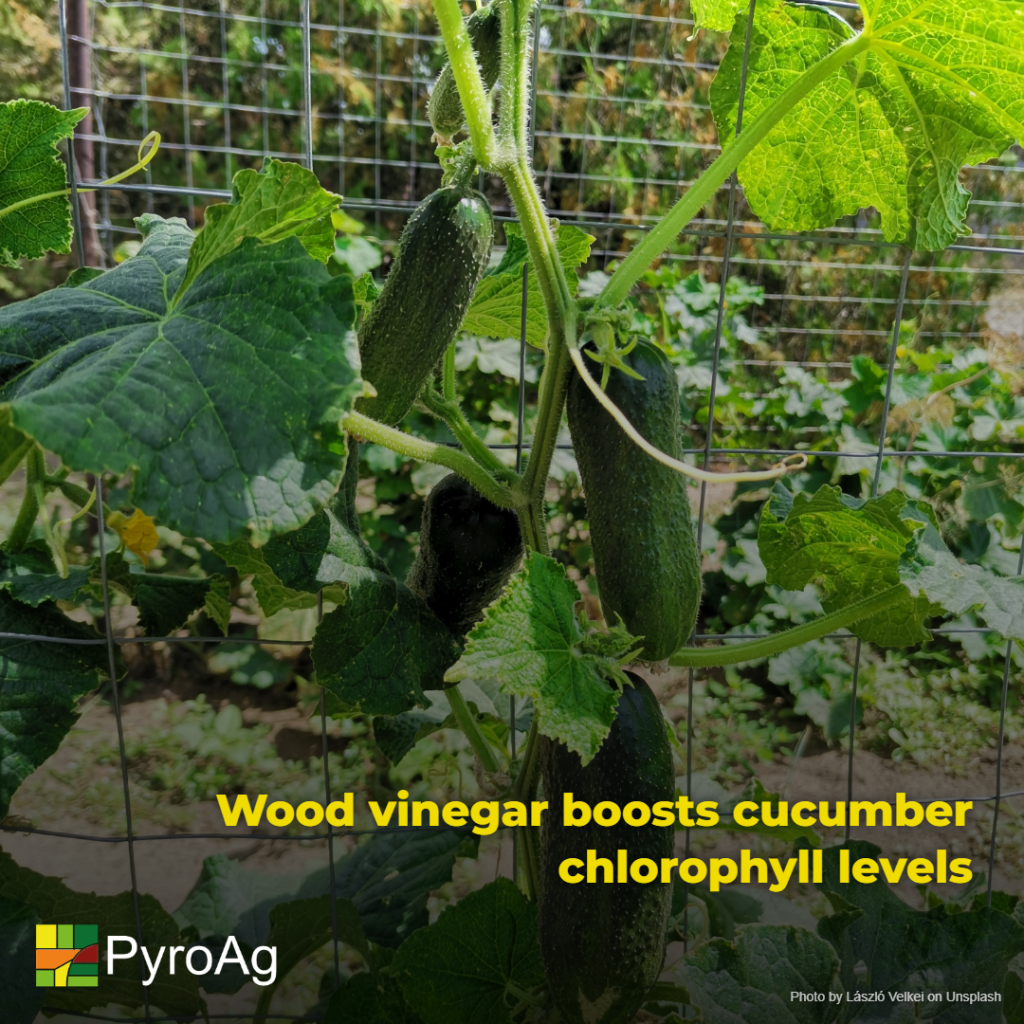
New research on greenhouse cucumbers has found that wood vinegar applications significantly increased chlorophyll a levels, with the highest results occurring at a 2 mg/L application rate. The study, published in the Journal of Plant Process and Function, examined how different concentrations of wood vinegar — both alone and combined with amino acids — affected the growth and quality of cucumber plants in controlled greenhouse conditions.
Researchers tested wood vinegar at various concentrations on cucumber variety ‘Keyhan’, measuring its effects on plant physiology and development. The trials included wood vinegar applications ranging from low to moderate concentrations, with some treatments also incorporating amino acid supplements to assess potential synergistic effects.
The standout finding centred on chlorophyll production. Chlorophyll a — the primary pigment responsible for photosynthesis — showed its greatest increase when plants received 2 mg/L of wood vinegar without any amino acid addition. Notably, a combination treatment also performed well: 0.5 mg/L amino acid paired with 6 mg/L wood vinegar produced similarly strong chlorophyll responses.
Higher chlorophyll levels typically indicate improved photosynthetic capacity, which can translate to better plant vigour and productivity. For greenhouse cucumber growers, enhanced chlorophyll content may support more robust vegetative growth and potentially improved yields, though the study examined physiological markers rather than final harvest outcomes.
This research adds to the growing body of evidence examining wood vinegar’s role in protected cropping systems. Greenhouse environments offer controlled conditions ideal for testing precise application rates and observing plant responses. While most wood vinegar research has focused on field crops and soil health, this work demonstrates measurable physiological effects in intensive horticultural production.
The study’s exploration of combination treatments — wood vinegar plus amino acids — reflects practical interest in how wood vinegar might complement other inputs in integrated nutrient programs. The varied responses across different concentration combinations suggest that application rates matter, and that optimal dosing may depend on whether wood vinegar is used alone or as part of a broader input strategy.
For Australian greenhouse growers producing cucumbers or similar crops, these findings highlight wood vinegar as a material worthy of consideration in trials, particularly for growers interested in exploring bio-based inputs alongside conventional nutrition programs.
Source: The effect of wood vinegar and paral aminofol amino acid on the quantitative and qualitative characteristics of greenhouse cucumber (Cucumis sativus cv. Keyhan) — Journal of Plant Process and Function, 2026
Interested in learning more about wood vinegar? Order PyroAg now or call 1800 PYROAG (1800 796 224).