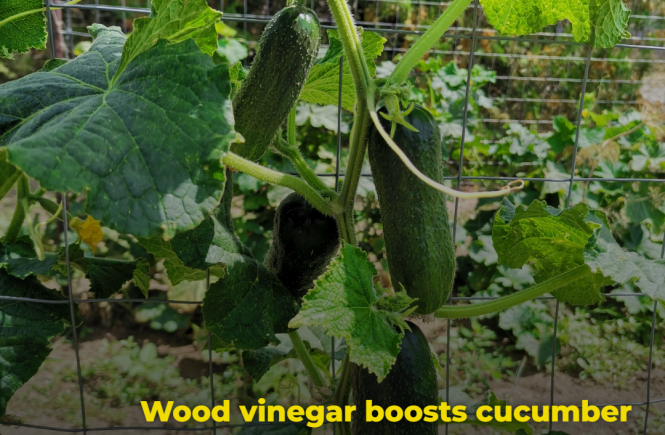

Wood Vinegar Boosts Wheat Yields and Fertiliser Efficiency in Sandy Soils
New research has found that wood vinegar significantly improved wheat productivity and enhanced fertiliser efficiency when applied to sandy soils. The study, published in the Menoufia Journal of Soil Science, showed that wood vinegar increased both grain and straw yields while improving soil nutrient availability — findings that could benefit Australian growers managing light-textured soils.
Researchers tested wood vinegar at different dilution rates alongside biochar applications on sandy soil planted with wheat. The treatments were compared against a control group to measure changes in soil properties and crop performance.
The results were clear: wood vinegar applications increased soil content of available nitrogen, phosphorus, and potassium. Both wheat grain and straw yields increased compared to the control treatment. The research found that wood vinegar enhanced fertiliser efficiency, with the high application rate (1:300 dilution) showing particularly strong results.
Sandy soils present specific challenges for crop production. Their low organic matter content and poor nutrient-holding capacity mean applied fertilisers can leach quickly through the soil profile, reducing efficiency and potentially impacting water quality. The research suggests wood vinegar may help address these issues by improving how sandy soils retain and make nutrients available to crops.
The study also examined how biochar and wood vinegar affected soil physicochemical properties — the combination of physical characteristics (like structure and water-holding capacity) and chemical properties (like pH and nutrient content) that determine how well soil supports plant growth.
This research adds to a growing body of evidence exploring wood vinegar’s role in agricultural systems. While biochar has received considerable attention as a soil amendment, wood vinegar — a co-product of biochar production — is increasingly being studied for its potential benefits to soil health and crop productivity.
For growers working with sandy soils, particularly those looking to improve fertiliser efficiency and nutrient retention, these findings offer encouraging evidence that wood vinegar applications may deliver measurable improvements in both soil properties and crop yields.
Source: EVALUATING THE IMPACT OF BIOCHAR AND WOOD VINEGAR ON THE PHYSICOCHEMICAL PROPERTIES OF SANDY SOIL AND WHEAT PRODUCTIVITY — Menoufia Journal of Soil Science, 2026
Interested in learning more about wood vinegar? Order PyroAg now or call 1800 PYROAG (1800 796 224).