Wood Vinegar Shows Promise for Improving Mungbean Yields in Sustainable Farming Systems
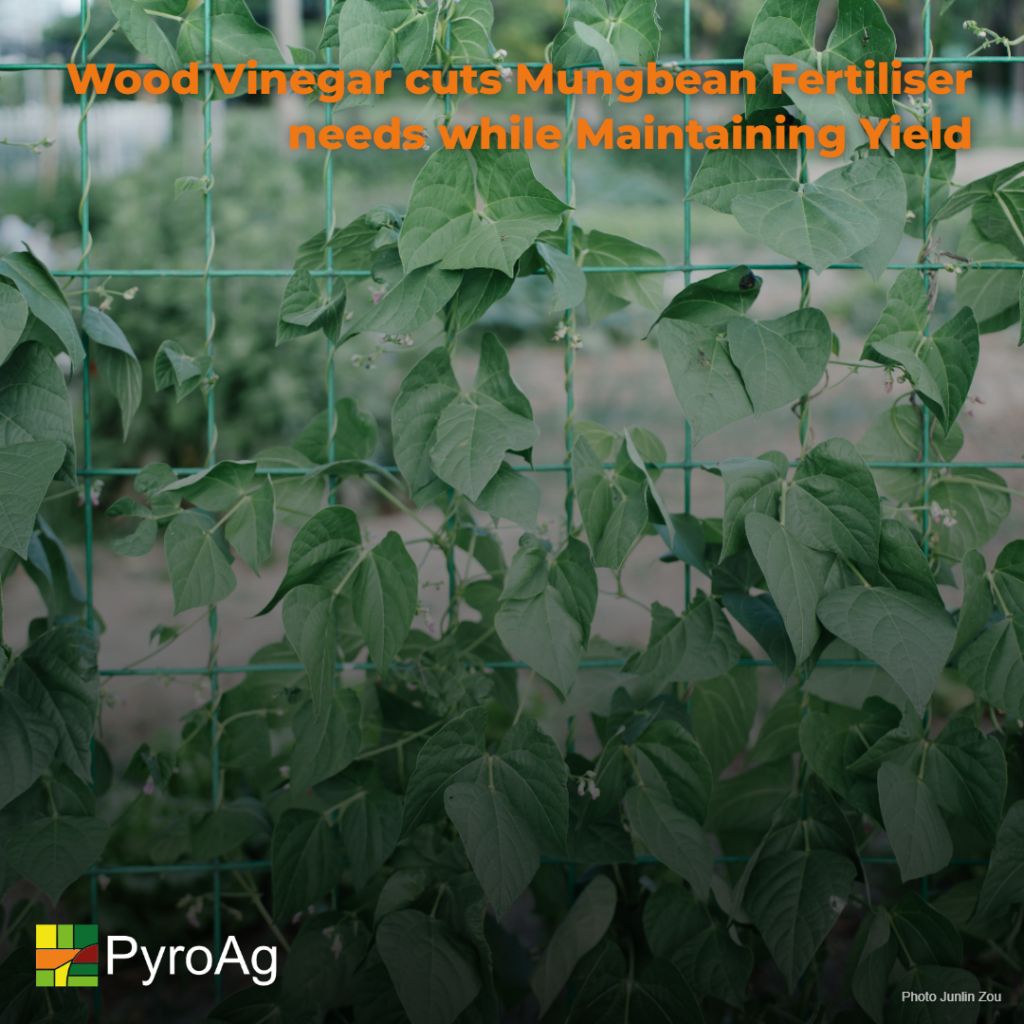
New research comparing sustainable farming techniques has found that wood vinegar application contributed to improved mungbean yields when used alongside foliar fertilisers. The study, which tested wood vinegar against other foliar treatments including nano fertilisers and amino acids, provides growers with fresh evidence about wood vinegar’s potential role in pulse crop production.
Researchers YQ Jawad and MA Ali evaluated how different foliar treatments affected mungbean performance when combined with a 2 ppm application rate. The treatments included wood vinegar, balanced nano fertiliser, amino acids, and a water-only control. This head-to-head comparison allowed the team to assess wood vinegar’s performance against other products marketed for sustainable agriculture.
The results showed that wood vinegar enhanced fertiliser efficiency in the mungbean crop. Certain yield traits responded significantly to wood vinegar application, while other characteristics showed stronger responses to the balanced nano-compound fertiliser. This suggests that different foliar treatments may influence different aspects of crop development — a finding that could help growers tailor their approach based on specific production goals.
While the abstract doesn’t provide detailed yield figures, the research contributes to a growing body of evidence examining wood vinegar’s agronomic effects. Wood vinegar — also known as pyroligneous acid — is produced during charcoal manufacturing and contains organic acids and other compounds that may influence plant growth and soil biology. Studies have explored its use across various crops and growing conditions, though responses can vary depending on application rates, timing, crop type, and environmental factors.
For Australian pulse growers, this research adds another data point to consider when evaluating foliar treatment options. Mungbeans are an important summer pulse crop in northern farming systems, valued for their nitrogen fixation and role in crop rotations. Any technique that improves fertiliser efficiency while supporting sustainable farming practices warrants attention in an environment of rising input costs.
Source: Response of mungbean yield to some sustainable farming techniques. — 2026
Interested in learning more about wood vinegar? Order PyroAg now or call 1800 PYROAG (1800 796 224).